Buy kispali.eu ?
We are moving the project
kispali.eu .
Are you interested in purchasing the domain
kispali.eu ?
domain@kv-gmbh.de · 0541-91531010
Buy kispali.eu ?
How to calculate the screw force from the tightening torque?
To calculate the screw force from the tightening torque, you can use the formula: Force = Torque / (Thread pitch * 2π). First, convert the tightening torque from pound-feet to pound-inches if necessary. Then, divide the torque by the product of the thread pitch and 2π to obtain the screw force in pounds. This formula takes into account the thread pitch and the rotational force applied to the screw to determine the axial force exerted on the screw. **
How much force is required to turn the micrometer screw?
The force required to turn the micrometer screw depends on the pitch of the screw and the mechanical advantage of the micrometer. The pitch of the screw refers to the distance the spindle advances with one complete turn of the thimble, and the mechanical advantage is the ratio of the distance moved by the spindle to the distance moved by the thimble. Typically, micrometers are designed to provide precise measurements with minimal force, so the force required to turn the micrometer screw is relatively low. However, the exact force required will vary depending on the specific design and construction of the micrometer. **


Similar search terms for FORCE-905U1-Screw-Extractor
Top-Angebote
Products related to FORCE-905U1-Screw-Extractor:
-
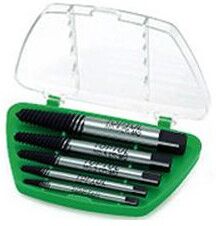
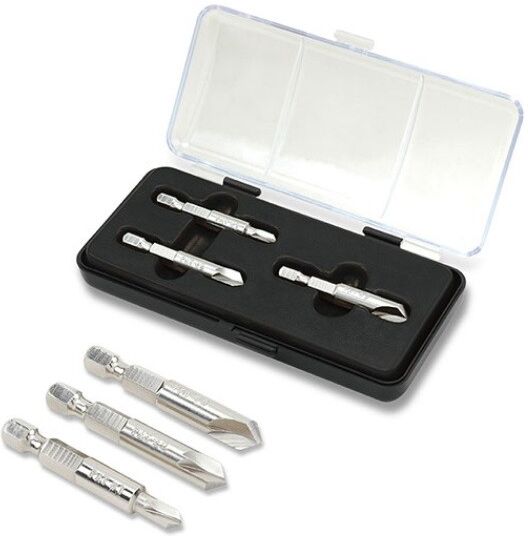
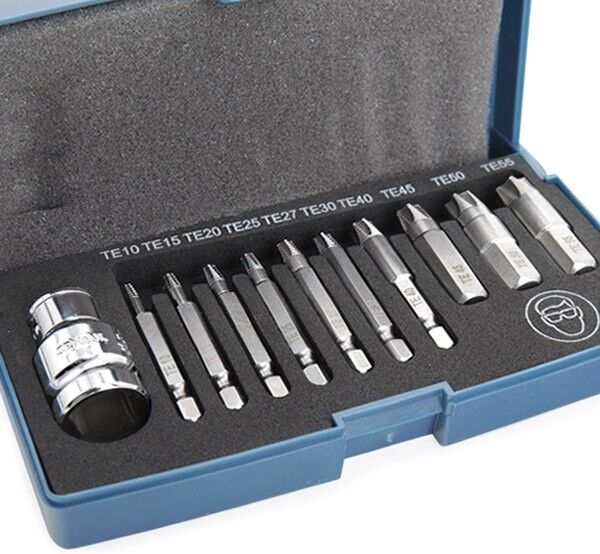
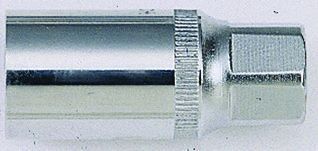
KUNZER 7TXSA11 Screw ExtractorDrive side (profile): External Hexagon; Drive [inch]: 1/2; Bolt Head-/Nut Design: Hexagon; Size: E10 / 6мм, E15 / 6мм, E20 / 6мм, E25 / 6мм, E27 / 6мм, E30 / 6мм, E40 / 6мм, E45 / 10 мм, E50 / 10 мм, E55 / 10 мм; Number of tools: 1123,49 £*Shipping: 8,45 £Secure redirect to the provider

-
What is the force of a nutcracker with a threaded screw?
A nutcracker with a threaded screw applies a mechanical force to crack open nuts. As the screw is turned, it exerts pressure on the nut, causing it to crack open. The force applied by the nutcracker depends on the pitch of the screw and the amount of torque applied to turn the screw. The mechanical advantage of the threaded screw allows for a greater force to be exerted on the nut, making it easier to crack open. **
-
"Does my extractor hood work?"
To determine if your extractor hood is working, you can perform a simple test by turning it on and holding a piece of tissue paper near the hood vent. If the tissue paper is drawn towards the vent, then the extractor hood is working properly. Additionally, you can also check the filters and vents for any blockages or build-up of grease, as this can affect the performance of the hood. If you are still unsure, it may be best to consult a professional to inspect and service the extractor hood. **
-
Which pipes for extractor hood?
When choosing pipes for an extractor hood, it is important to consider the type of hood you have and the layout of your kitchen. Most extractor hoods require ducting pipes that are either round or rectangular in shape. Round pipes are commonly used for ventilation as they provide efficient airflow, while rectangular pipes are suitable for spaces with limited height. It is recommended to use smooth, rigid pipes to minimize air resistance and ensure optimal performance of the extractor hood. **
-
What is a honey extractor?
A honey extractor is a mechanical device used by beekeepers to extract honey from honeycombs without destroying them. It works by using centrifugal force to spin the frames of honeycomb, causing the honey to be flung out of the cells and collected at the bottom of the extractor. This process allows beekeepers to harvest honey efficiently and without damaging the comb, making it easier to reuse by the bees. Honey extractors come in various sizes and designs to accommodate different beekeeping operations. **

How does the number of turns of a screw affect the force required when screwing?
The number of turns of a screw directly affects the force required when screwing. The more turns a screw has, the greater the distance the screw travels into the material, which means more work is done. This increased work results in a higher force needed to overcome the resistance and drive the screw in. Conversely, a screw with fewer turns will require less force to screw in as it covers a shorter distance. **
How do you screw a screw together?
To screw a screw together, first align the two pieces you want to join and hold them firmly in place. Then, insert the screw into the hole in the first piece and begin turning it clockwise with a screwdriver or drill. As you turn the screw, it will start to pull the two pieces together. Continue turning the screw until it is fully tightened and the two pieces are securely joined. Be careful not to overtighten the screw, as this can damage the materials or strip the screw threads. **
Top-Angebote
Products related to FORCE-905U1-Screw-Extractor:
-
How to calculate the screw force from the tightening torque?
To calculate the screw force from the tightening torque, you can use the formula: Force = Torque / (Thread pitch * 2π). First, convert the tightening torque from pound-feet to pound-inches if necessary. Then, divide the torque by the product of the thread pitch and 2π to obtain the screw force in pounds. This formula takes into account the thread pitch and the rotational force applied to the screw to determine the axial force exerted on the screw. **
-
How much force is required to turn the micrometer screw?
The force required to turn the micrometer screw depends on the pitch of the screw and the mechanical advantage of the micrometer. The pitch of the screw refers to the distance the spindle advances with one complete turn of the thimble, and the mechanical advantage is the ratio of the distance moved by the spindle to the distance moved by the thimble. Typically, micrometers are designed to provide precise measurements with minimal force, so the force required to turn the micrometer screw is relatively low. However, the exact force required will vary depending on the specific design and construction of the micrometer. **
-
What is the force of a nutcracker with a threaded screw?
A nutcracker with a threaded screw applies a mechanical force to crack open nuts. As the screw is turned, it exerts pressure on the nut, causing it to crack open. The force applied by the nutcracker depends on the pitch of the screw and the amount of torque applied to turn the screw. The mechanical advantage of the threaded screw allows for a greater force to be exerted on the nut, making it easier to crack open. **
-
"Does my extractor hood work?"
To determine if your extractor hood is working, you can perform a simple test by turning it on and holding a piece of tissue paper near the hood vent. If the tissue paper is drawn towards the vent, then the extractor hood is working properly. Additionally, you can also check the filters and vents for any blockages or build-up of grease, as this can affect the performance of the hood. If you are still unsure, it may be best to consult a professional to inspect and service the extractor hood. **
Similar search terms for FORCE-905U1-Screw-Extractor
-
KUNZER 7TXSA11 Screw ExtractorDrive side (profile): External Hexagon; Drive [inch]: 1/2; Bolt Head-/Nut Design: Hexagon; Size: E10 / 6мм, E15 / 6мм, E20 / 6мм, E25 / 6мм, E27 / 6мм, E30 / 6мм, E40 / 6мм, E45 / 10 мм, E50 / 10 мм, E55 / 10 мм; Number of tools: 1123,49 £*Shipping: 8,45 £Secure redirect to the provider
-
Which pipes for extractor hood?
When choosing pipes for an extractor hood, it is important to consider the type of hood you have and the layout of your kitchen. Most extractor hoods require ducting pipes that are either round or rectangular in shape. Round pipes are commonly used for ventilation as they provide efficient airflow, while rectangular pipes are suitable for spaces with limited height. It is recommended to use smooth, rigid pipes to minimize air resistance and ensure optimal performance of the extractor hood. **
-
What is a honey extractor?
A honey extractor is a mechanical device used by beekeepers to extract honey from honeycombs without destroying them. It works by using centrifugal force to spin the frames of honeycomb, causing the honey to be flung out of the cells and collected at the bottom of the extractor. This process allows beekeepers to harvest honey efficiently and without damaging the comb, making it easier to reuse by the bees. Honey extractors come in various sizes and designs to accommodate different beekeeping operations. **
-
How does the number of turns of a screw affect the force required when screwing?
The number of turns of a screw directly affects the force required when screwing. The more turns a screw has, the greater the distance the screw travels into the material, which means more work is done. This increased work results in a higher force needed to overcome the resistance and drive the screw in. Conversely, a screw with fewer turns will require less force to screw in as it covers a shorter distance. **
-
How do you screw a screw together?
To screw a screw together, first align the two pieces you want to join and hold them firmly in place. Then, insert the screw into the hole in the first piece and begin turning it clockwise with a screwdriver or drill. As you turn the screw, it will start to pull the two pieces together. Continue turning the screw until it is fully tightened and the two pieces are securely joined. Be careful not to overtighten the screw, as this can damage the materials or strip the screw threads. **
* All prices are inclusive of VAT and, if applicable, plus shipping costs. The offer information is based on the details provided by the respective shop and is updated through automated processes. Real-time updates do not occur, so deviations can occur in individual cases. ** Note: Parts of this content were created by AI.