Buy kispali.eu ?
We are moving the project
kispali.eu .
Are you interested in purchasing the domain
kispali.eu ?
domain@kv-gmbh.de · 0541-91531010
Buy kispali.eu ?
What is Disjoint?
Disjoint refers to two or more sets that have no elements in common. In other words, the intersection of disjoint sets is an empty set. For example, if set A = {1, 2, 3} and set B = {4, 5, 6}, then A and B are disjoint sets because they do not share any elements. Disjoint sets are often used in mathematics and statistics to analyze relationships between different groups or categories. **
What are disjoint subsets?
Disjoint subsets are subsets of a larger set that have no elements in common. In other words, if two subsets are disjoint, it means that there is no element that is present in both subsets. For example, if we have a set A = {1, 2, 3} and two subsets B = {1, 2} and C = {3, 4}, then B and C are disjoint subsets because they do not share any common elements. **

Similar search terms for Disjoint
Top-Angebote
Products related to Disjoint:
-
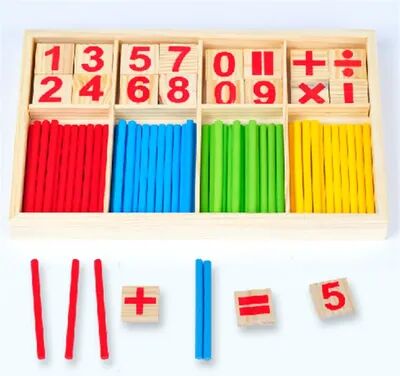
Smart Shopping Spot Wooden Digital Stick Educational Toys For Children, Montessori Math Teaching Aid For Knowledge Wooden Digital Stick Educational Toys For Children, Montessori Math Teaching Aid For KnowledgeFun and Engaging Learning Tool Introduce your child to the world of mathematics enlightenment with these Wooden Educational Toys. Designed to foster a love for learning, this Montessoriinspired tool uses digital sticks to make math both fun and...34,97 $*Shipping: 0,00 $Secure redirect to the provider
-
Inspire Daily Merch Mini Portable Lens Carrot Telescope 3D Printed Educational Games For Kids Gifts Retractable Toys Mini Portable Lens Carrot Telescope 3D Printed Educational Games For Kids Gifts Retractable ToysDiscover the World with the 8x Lens Carrot Telescope Introduce your child to the wonders of the world with the 8x Lens Carrot Telescope. This unique, mini portable telescope is perfect for young adventurers, offering an exciting way to explore...59,97 $*Shipping: 0,00 $Secure redirect to the provider
-
Youfap Market Pinball Battle Table Toys, Children Board Games, Soccer Marble Shoot Game, Family Fun Interactive Social Toy Pinball Battle Table Toys, Children Board Games, Soccer Marble Shoot Game, Family Fun Interactive Social ToyEngage in Interactive Family Fun with the Children Pinball Machine This children pinball machine provides hours of interactive fun, combining the thrill of board games with the excitement of pinball battle. Designed for kids and families alike, it...64,97 $*Shipping: 0,00 $Secure redirect to the provider
-
The Cart Load NEW Educational Learning Toys For Kids, Toddlers, Interactive Learning Pad, Best Early Learning Tool For Children NEW Educational Learning Toys For Kids, Toddlers, Interactive Learning Pad, Best Early Learning Tool For ChildrenStimulate Learning Through Synergy with the NEW Educational Learning Toys for Kid Give your child a head start in their learning journey with the NEW Educational Learning Toys for Kids, designed to captivate and engage toddlers aged 2 to 7. This...39,97 $*Shipping: 0,00 $Secure redirect to the provider



-
Are complementary events disjoint?
Complementary events are not necessarily disjoint. Complementary events are two events that together cover all possible outcomes of an experiment. Disjoint events, on the other hand, are events that have no outcomes in common. While complementary events are mutually exclusive, they can still have some outcomes in common, unlike disjoint events. **
-
Is independent the same as disjoint?
No, independent and disjoint are not the same. In probability theory, two events are considered independent if the occurrence of one event does not affect the probability of the other event occurring. On the other hand, two events are considered disjoint (or mutually exclusive) if they cannot both happen at the same time. In other words, if one event occurs, the other event cannot occur simultaneously. **
-
Are coin tosses generally disjoint and independent?
Coin tosses are generally considered to be independent events, meaning the outcome of one coin toss does not affect the outcome of another. Each coin toss has a 50% chance of landing on heads or tails, regardless of previous tosses. However, coin tosses are not disjoint events because they can both result in the same outcome (e.g. both heads or both tails). **
-
What is a question about disjoint cycles in permutations?
A question about disjoint cycles in permutations could be: "How can we determine the order of a permutation given its disjoint cycle representation?" This question involves understanding how to calculate the order of a permutation by finding the least common multiple of the lengths of its disjoint cycles. It also requires knowledge of how to express a permutation as a product of disjoint cycles and how to identify the cycle structure of a permutation. **
Why are the two events in probability theory not disjoint?
The two events in probability theory are not disjoint because they can have outcomes that overlap or have elements in common. Disjoint events, also known as mutually exclusive events, have no outcomes in common and cannot occur simultaneously. However, in the case of non-disjoint events, there is a possibility of shared outcomes or elements, allowing both events to occur at the same time. This distinction is important in probability theory as it affects the calculation of probabilities and the understanding of the relationship between different events. **
When are the kernel and image of vector spaces disjoint?
The kernel and image of a linear transformation on a vector space are only disjoint when the transformation is injective, meaning it has a trivial kernel (containing only the zero vector). In this case, the only vector that maps to the zero vector in the image is the zero vector itself, so the kernel and image have no non-zero vectors in common. In all other cases, there will be non-zero vectors in the kernel that also belong to the image, making the kernel and image not disjoint. **
Top-Angebote
Products related to Disjoint:
-
DOLU Toys 7-in-1 Backyard Playground Outdoor Use for Children Ages 2 to 5 YearsTHE 7-IN-1 PLAYGROUND features a swing, slide, basketball net, goal for soccer and more offering kids even more ways to play. The toddlers swing seat is height adjustable to make sure that your kids get years of fun from the Dolu playground.378,49 $*Shipping: 0,00 $Secure redirect to the provider
-
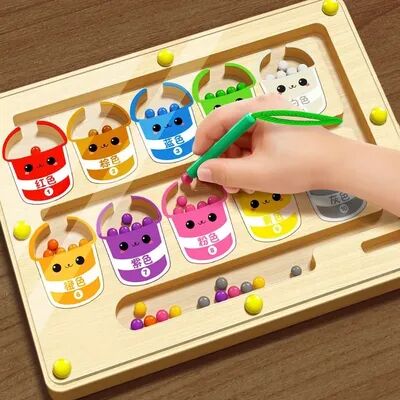
Tiny Tots Teens Trends Educational Toys For Kids, Montessori Magnetic Color Sorting Games, Sensory Play Maze Board Pen, Wooden Bead Games Educational Toys For Kids, Montessori Magnetic Color Sorting Games, Sensory Play Maze Board Pen, Wooden Bead GamesEngage Kids with Montessori Magnetic Color Sorting Games This Montessori Magnetic Color Sorting Game is designed to captivate childrens attention while helping them develop essential cognitive skills. Crafted from durable wooden materials, this...43,97 $*Shipping: 0,00 $Secure redirect to the provider
-
Smart Shopping Spot Wooden Digital Stick Educational Toys For Children, Montessori Math Teaching Aid For Knowledge Wooden Digital Stick Educational Toys For Children, Montessori Math Teaching Aid For KnowledgeFun and Engaging Learning Tool Introduce your child to the world of mathematics enlightenment with these Wooden Educational Toys. Designed to foster a love for learning, this Montessoriinspired tool uses digital sticks to make math both fun and...34,97 $*Shipping: 0,00 $Secure redirect to the provider
-
Inspire Daily Merch Mini Portable Lens Carrot Telescope 3D Printed Educational Games For Kids Gifts Retractable Toys Mini Portable Lens Carrot Telescope 3D Printed Educational Games For Kids Gifts Retractable ToysDiscover the World with the 8x Lens Carrot Telescope Introduce your child to the wonders of the world with the 8x Lens Carrot Telescope. This unique, mini portable telescope is perfect for young adventurers, offering an exciting way to explore...59,97 $*Shipping: 0,00 $Secure redirect to the provider
-
What is Disjoint?
Disjoint refers to two or more sets that have no elements in common. In other words, the intersection of disjoint sets is an empty set. For example, if set A = {1, 2, 3} and set B = {4, 5, 6}, then A and B are disjoint sets because they do not share any elements. Disjoint sets are often used in mathematics and statistics to analyze relationships between different groups or categories. **
-
What are disjoint subsets?
Disjoint subsets are subsets of a larger set that have no elements in common. In other words, if two subsets are disjoint, it means that there is no element that is present in both subsets. For example, if we have a set A = {1, 2, 3} and two subsets B = {1, 2} and C = {3, 4}, then B and C are disjoint subsets because they do not share any common elements. **
-
Are complementary events disjoint?
Complementary events are not necessarily disjoint. Complementary events are two events that together cover all possible outcomes of an experiment. Disjoint events, on the other hand, are events that have no outcomes in common. While complementary events are mutually exclusive, they can still have some outcomes in common, unlike disjoint events. **
-
Is independent the same as disjoint?
No, independent and disjoint are not the same. In probability theory, two events are considered independent if the occurrence of one event does not affect the probability of the other event occurring. On the other hand, two events are considered disjoint (or mutually exclusive) if they cannot both happen at the same time. In other words, if one event occurs, the other event cannot occur simultaneously. **
Similar search terms for Disjoint
-
Youfap Market Pinball Battle Table Toys, Children Board Games, Soccer Marble Shoot Game, Family Fun Interactive Social Toy Pinball Battle Table Toys, Children Board Games, Soccer Marble Shoot Game, Family Fun Interactive Social ToyEngage in Interactive Family Fun with the Children Pinball Machine This children pinball machine provides hours of interactive fun, combining the thrill of board games with the excitement of pinball battle. Designed for kids and families alike, it...64,97 $*Shipping: 0,00 $Secure redirect to the provider
-
The Cart Load NEW Educational Learning Toys For Kids, Toddlers, Interactive Learning Pad, Best Early Learning Tool For Children NEW Educational Learning Toys For Kids, Toddlers, Interactive Learning Pad, Best Early Learning Tool For ChildrenStimulate Learning Through Synergy with the NEW Educational Learning Toys for Kid Give your child a head start in their learning journey with the NEW Educational Learning Toys for Kids, designed to captivate and engage toddlers aged 2 to 7. This...39,97 $*Shipping: 0,00 $Secure redirect to the provider
-
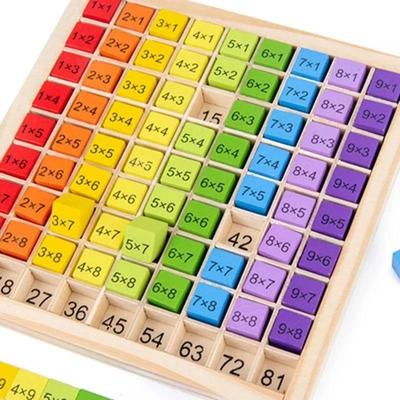
Lush Living Finds Montessori Wooden Math Toys For Children, Educational Multiplication Table Math Teaching Aids For Kids And Toddlers Montessori Wooden Math Toys For Children, Educational Multiplication Table Math Teaching Aids For Kids And ToddlersDiscover the perfect Montessori Educational Wooden Math Toys for Kids designed to foster early learning and development. Crafted from highquality wood, this educational toy offers a handson approach to teaching the 99 Multiplication Table and basic...21,97 $*Shipping: 0,00 $Secure redirect to the provider
-
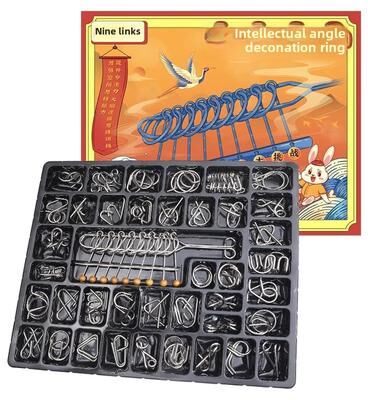
Combo Retail Shop Nine Link Intelligent Buckle Educational Toy Lock Full Set, Educational Toys For Children And Primary Learning 25 pieceIntroduce your child to the world of learning with the Nine Link Intelligent Buckle Educational Toy Lock Full Set. Designed to enhance cognitive skills and fine motor abilities, this 24piece set offers an exciting way to engage children in...115,97 $*Shipping: 0,00 $Secure redirect to the provider
-
Are coin tosses generally disjoint and independent?
Coin tosses are generally considered to be independent events, meaning the outcome of one coin toss does not affect the outcome of another. Each coin toss has a 50% chance of landing on heads or tails, regardless of previous tosses. However, coin tosses are not disjoint events because they can both result in the same outcome (e.g. both heads or both tails). **
-
What is a question about disjoint cycles in permutations?
A question about disjoint cycles in permutations could be: "How can we determine the order of a permutation given its disjoint cycle representation?" This question involves understanding how to calculate the order of a permutation by finding the least common multiple of the lengths of its disjoint cycles. It also requires knowledge of how to express a permutation as a product of disjoint cycles and how to identify the cycle structure of a permutation. **
-
Why are the two events in probability theory not disjoint?
The two events in probability theory are not disjoint because they can have outcomes that overlap or have elements in common. Disjoint events, also known as mutually exclusive events, have no outcomes in common and cannot occur simultaneously. However, in the case of non-disjoint events, there is a possibility of shared outcomes or elements, allowing both events to occur at the same time. This distinction is important in probability theory as it affects the calculation of probabilities and the understanding of the relationship between different events. **
-
When are the kernel and image of vector spaces disjoint?
The kernel and image of a linear transformation on a vector space are only disjoint when the transformation is injective, meaning it has a trivial kernel (containing only the zero vector). In this case, the only vector that maps to the zero vector in the image is the zero vector itself, so the kernel and image have no non-zero vectors in common. In all other cases, there will be non-zero vectors in the kernel that also belong to the image, making the kernel and image not disjoint. **
* All prices are inclusive of VAT and, if applicable, plus shipping costs. The offer information is based on the details provided by the respective shop and is updated through automated processes. Real-time updates do not occur, so deviations can occur in individual cases. ** Note: Parts of this content were created by AI.